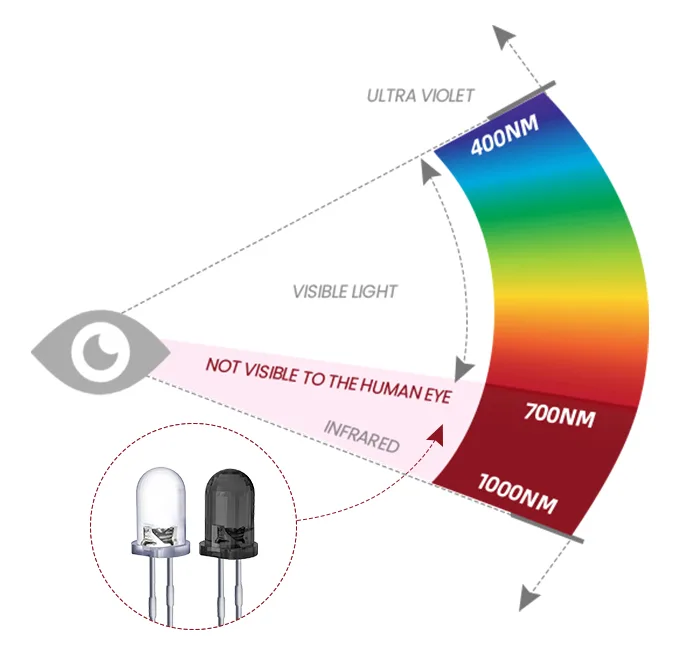
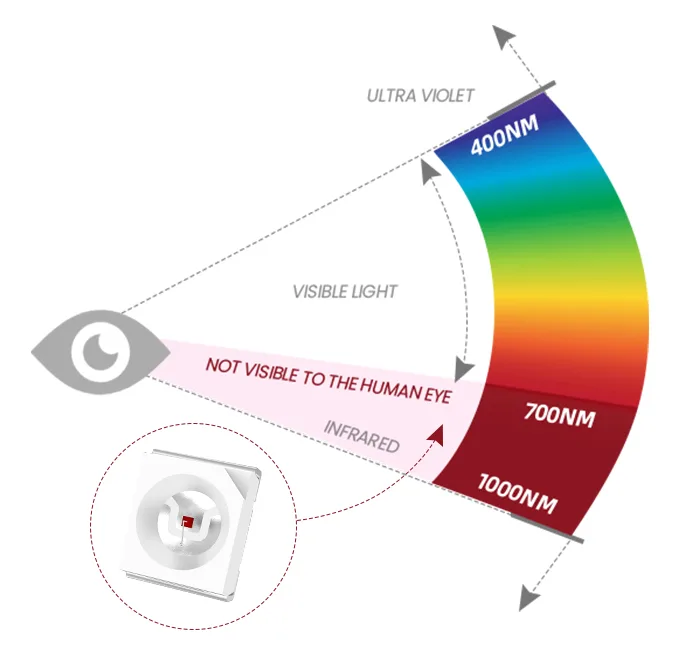
“As an indispensable component of modern electronic devices, indicator LED lights go far beyond simple visual signal transmission in their definition and function. They use light of specific colors to indicate device statuses such as power-on, standby, malfunction, or data transmission, providing users with intuitive feedback. For example, a red indicator LED light may signal that a device is charging, while a green LED may indicate that the device is fully charged or in normal operation.”
By Industry
Operating Voltage and Current
Current-Limiting Resistor
Voltage Regulation
Microcontrollers
Optical Design Considerations
Optical design is a critical step in ensuring the performance and user experience of indicator LED. It involves not only the light output efficiency of the LED source but also light distribution, color rendering index (CRI), color temperature, and light attenuation characteristics. For example, a high-CRI LED indicator can more accurately reflect colors, which is crucial for applications requiring precise color recognition. During design, engineers use optical simulation software (e.g., Zemax or TracePro) to optimize the LED’s optical path, ensuring light propagates as intended, reducing light loss, and improving overall efficiency. Additionally, optical components such as lenses, reflectors, or light guides can further control light distribution to achieve uniform illumination.
For example, the design of car taillights requires special consideration of light scattering and concentration to ensure sufficient warning effects under various weather and lighting conditions. In the optical design of LED indicators, innovative thinking and attention to detail are key to driving performance breakthroughs.
Durability and reliability are critical performance metrics in the design and application of indicator LED. Durability is typically measured by the Mean Time Between Failures (MTBF), which reflects the average time a product can operate normally under specified conditions. For example, high-quality indicator LED may have an MTBF of 50,000 hours or more, meaning they can operate continuously for over five years under normal conditions without replacement. Improved durability not only reduces maintenance costs but also enhances user trust in the product.
In terms of reliability, LED indicators must maintain stable performance under various environmental conditions, including extreme temperatures, humidity, vibration, and voltage fluctuations. These factors must be considered during design to ensure the indicator LED retains functionality in harsh environments. For example, measures can effectively extend the service life of indicators LED and maintain their brightness and color stability. Additionally, advanced circuit protection (e.g., overcurrent and short-circuit protection) can further enhance reliability.
With continuous technological advancement, intelligence and integration have become an inevitable trend in the development of indicator LED. Intelligence means indicator LED can achieve higher-level automated control through technologies like sensors and microprocessors, and can also integrate with IoT (Internet of Things) technology to enable remote monitoring and management. Integration emphasizes seamless integration of LED indicators with other systems or devices (e.g., security monitoring systems, energy management systems) to achieve more efficient information transmission. Intelligence and integration reflect innovation in the indicator LED field, driving products toward greater intelligence and efficiency.
Recommend Indicator LED 0603 LED.
A: Yes. We can send you free samples first, if the value is low. But our clients should pay for the shipping freight themselves. Samples fee needs to be charged if the value is high.
A: We usually ship by DHL, UPS, FedEx or TNT. It usually takes 3-5 days to arrive. Airline and sea shipping also can be an option.
Global delivery to 35+ countries. Backed by 19-year R&D experts.
Contact Us
We use cookies to enhance your browsing experience, serve personalised ads or content, and analyse our traffic. By clicking "Accept All", you consent to our use of cookies.
We use cookies to help you navigate efficiently and perform certain functions. You will find detailed information about all cookies under each consent category below.
The cookies that are categorised as "Necessary" are stored on your browser as they are essential for enabling the basic functionalities of the site. Show more
Necessary cookies are required to enable the basic features of this site, such as providing secure log-in or adjusting your consent preferences. These cookies do not store any personally identifiable data.
Functional cookies help perform certain functionalities like sharing the content of the website on social media platforms, collecting feedback, and other third-party features.
Analytical cookies are used to understand how visitors interact with the website. These cookies help provide information on metrics such as the number of visitors, bounce rate, traffic source, etc.
Performance cookies are used to understand and analyse the key performance indexes of the website which helps in delivering a better user experience for the visitors.
Advertisement cookies are used to provide visitors with customised advertisements based on the pages you visited previously and to analyse the effectiveness of the ad campaigns.