LED Lamp Beads For Plant Growth

LED Lamp Beads For Plant Growth

LED Grow Light Solution

Global Market Insights & Policy Landscape
Scientific Principles of Plant Lighting
Our Solution: Phosphor-Converted LED Technology

Global Market Insights & Policy Landscape

China Market Dynamics

Policy Support

Policy Support

China's Ministry of Agriculture prioritizes LED grow lights in national facility agriculture plans (2023-2030), with dedicated R&D funding and subsidies.
Arable Land Challenges

Arable Land Challenges

LED lighting boosts vertical farm yields by 3-5x, critical for China's food security with arable land per capita 40% of global average.

International Market Trends

Consumer Demand

Consumer Demand

Consumers in Europe and the United States have a growing demand for indoor home gardening and decorative plants, and the rise of e-commerce platforms has made it easier for consumers to purchase equipment at a low cost, driving an increase in sales of consumer plant growth lights.

Consumer-grade grow lights in EU/US reached $48M in 2024 (4.8% global share), projected to hit $76M by 2029 (CAGR 3.7%).
Emerging Applications

Emerging Applications

Urban farming and medicinal plants (e.g., 32% North American cannabis lighting market in 2024) drive professional-grade demand.

Light Spectrum Optimization

Key Wavelengths

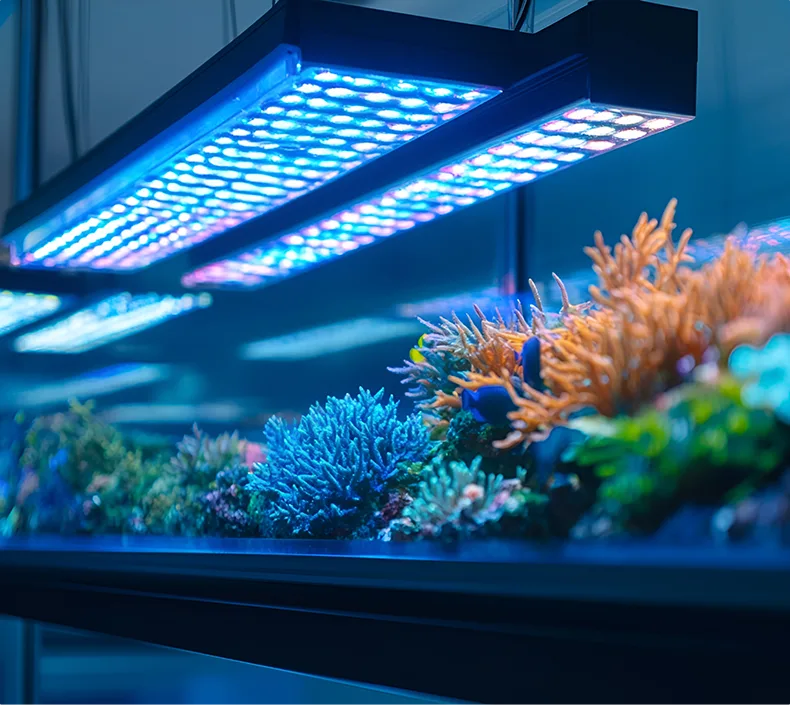
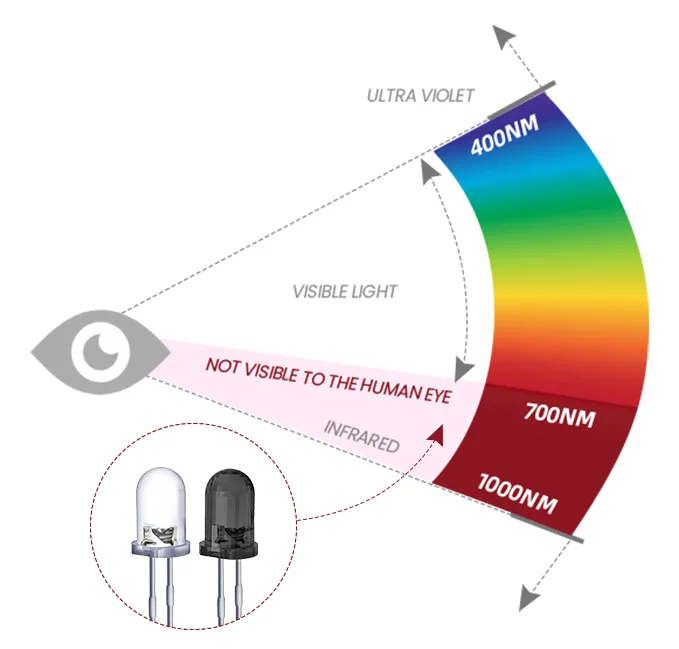
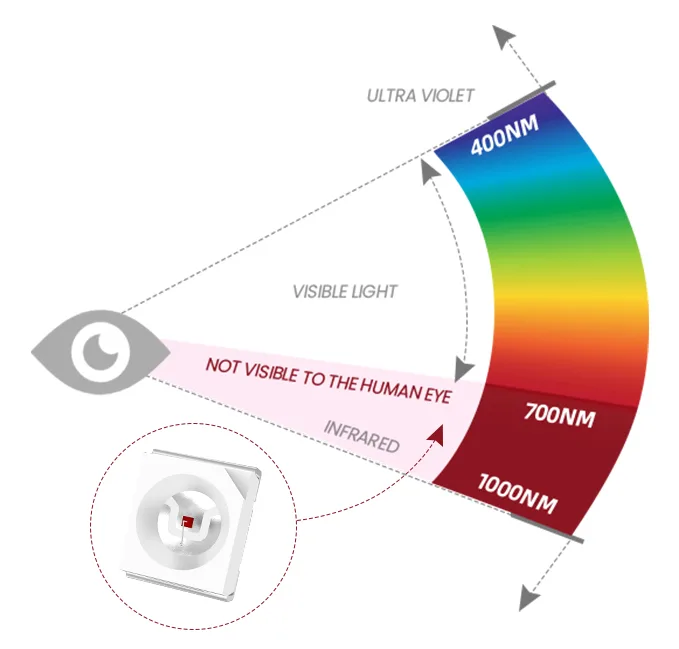
Do LED lights help plants grow? Yes. Different colors of LED lamp for plants have different physiological effects on plant growth.
 Light Spectrum Optimization

Technical Barriers

Driver Complexity

In commercial LED grow light production, a combination of 660nm, 460nm, and 620nm wavelengths is typically used. The drive voltage mismatch between 620nm (3.0V) and 460nm (3.4V) LEDs necessitates dual driver circuits, increasing system costs by 25%-30%.
Technical Barriers

Our Solution

Phosphor-Converted LED Technology

  • Core Innovation

    Core Innovation
    To solve this problem, the HQG LED R&D team, based on years of experience with white light, used phosphors of corresponding wavelengths and excited the phosphors with blue light, so that the spectrum emitted by the LED lamp for plants includes the spectrum of the main wavelengths. There is no need to consider the combination of two sets of driving voltages, which improves the competitiveness of the product in the market.
    Cost Efficiency
    25% lower system cost with 2.8μmol/J efficacy (vs industry avg. 2.4μmol/J).
  • Reliability Enhancement

    Humidity Resistance
    Humidity-Induced Risks in LED Packaging
    Moisture penetration in high-humidity environments (required for plant growth) may cause delamination of LED encapsulation materials (e.g., silicone, phosphor layers) from the substrate, reducing luminous efficacy by up to 20% and potentially triggering catastrophic failures such as gold wire fractures.
    Our Solution
    Through rigorous DOE (Design of Experiment) testing, we have screened and validated an optimal material combination that balances performance and cost-effectiveness for mainstream customer requirements.

Competitive Advantages

Global Compliance

Global Compliance

Design compliant with FCC/CE-EMC standards. Certification services (UL8800/EN 62471/FCC/CE-EMC) available
Sustainability

Sustainability

62% lower carbon footprint vs HID fixtures (ISO 14067 verified).
Competitive Advantages

Future Outlook

  • Smart Integration

    Smart Integration

    HQG LED's LED lamp for plants are suitable for IoT-enabled dimming systems to achieve dynamic spectrum adaptation to the plant growth cycle.
  • Global Partnerships

    Global Partnerships

    Support OEM service, cooperate with plant lamp brands labs for spectrum optimization.

Pain Points In Demand

  • Driver Complexity

    Driver Complexity

    In commercial LED grow light LED lamp for plants production, a combination of 660nm, 460nm, and 620nm wavelengths is typically used. The drive voltage mismatch between 620nm (3.0V) and 460nm (3.4V) LEDs necessitates dual driver circuits, increasing system costs by 25%-30%.

  • Humidity Resistance

    Humidity Resistance

    Humidity-Induced Risks in LED Packaging: Moisture penetration in high-humidity environments (required for plant growth) may cause delamination of LED encapsulation materials (e.g., silicone, phosphor layers) from the substrate, reducing luminous efficacy by up to 20% and potentially triggering catastrophic failures such as gold wire fractures.

Products Advantages

Products Advantages
Single-Driver Design

Single-Driver Design

To solve this problem, the HQG LED R&D team, based on years of experience with white light, used phosphors of corresponding wavelengths and excited the phosphors with blue light, so that the spectrum emitted by the LED lamp for plants includes the spectrum of the main wavelengths. There is no need to consider the combination of two sets of driving voltages, which improves the competitiveness of the product in the market.

Cost Efficiency

Cost Efficiency

25% lower system cost with 2.8μmol/J efficacy (vs industry avg. 2.4μmol/J).

Buy LED lamp beads for plants contact marketing005@hqgled.com

FAQ

  • Could you please send me the free sample, so that I could see and check its quality?

    A: Yes. We can send you free samples first, if the value is low. But our clients should pay for the shipping freight themselves. Samples fee needs to be charged if the value is high.

  • How do you ship the goods and how long does it take to arrive?

    A: We usually ship by DHL, UPS, FedEx or TNT. It usually takes 3-5 days to arrive. Airline and sea shipping also can be an option.

Download Latest E-Catalog

Download Latest E-Catalog

We value your privacy

We use cookies to enhance your browsing experience, serve personalised ads or content, and analyse our traffic. By clicking "Accept All", you consent to our use of cookies.