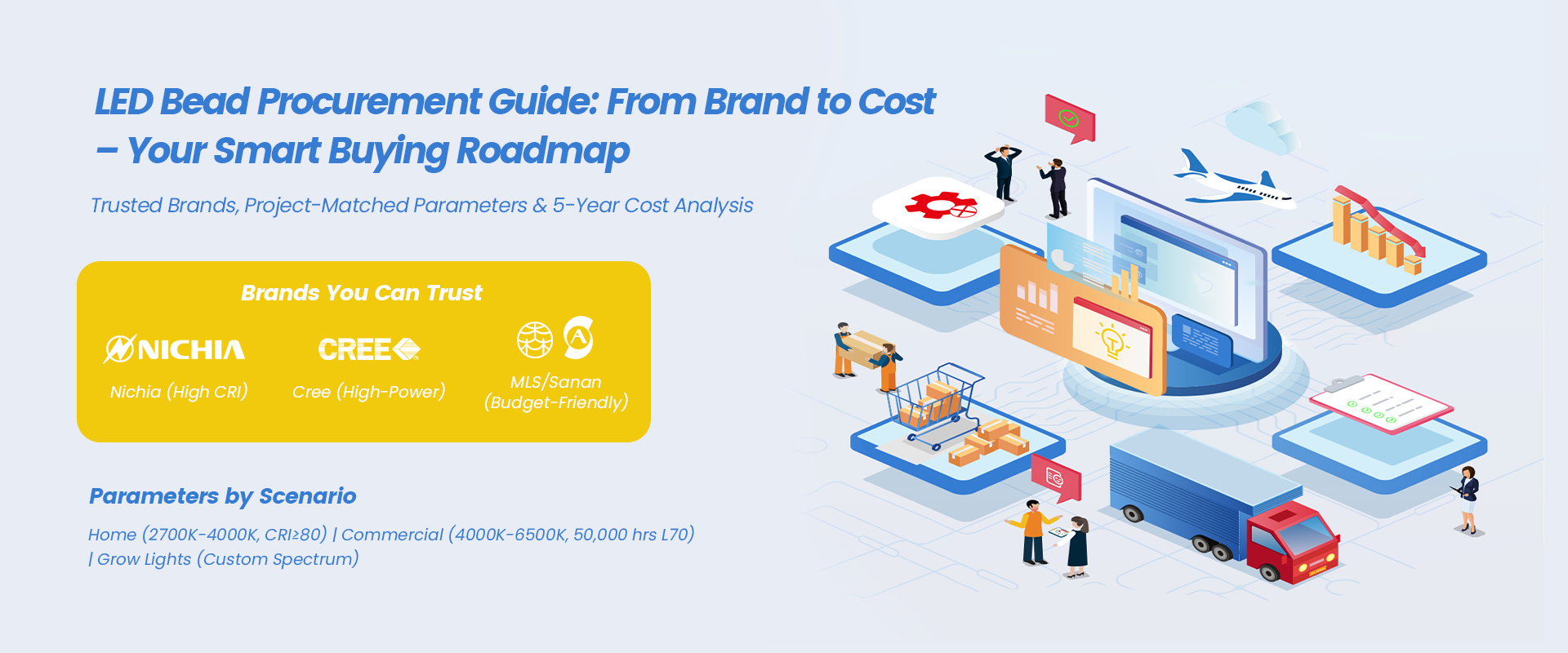
Whether it’s home, office lighting, or LED lighting projects such as plant growth lights, procuring suitable LED lamp beads is crucial for performance, efficiency, and lifespan. When choosing LED lamp beads, it is necessary to comprehensively evaluate core factors such as quality of LED, supplier reputation, and light emitting diode cost. This guide will provide practical strategies from three dimensions: screening brands, matching project requirements, and optimizing procurement costs to help you efficiently complete procurement decisions.
How to Choose LED Bead Brands in 3 Minutes
What are some trusted led lamp bead brands?
Procurement and Cost: Where to Buy and Budget. When choosing LED lamp beads, consider the following factors:
1.1 Screening Reputable Suppliers
Priority is given to established suppliers with their own factories on B2B platforms (such as Alibaba, Digi-Key, Mouser), or purchase through authorized dealers/manufacturers to avoid counterfeit products.
Tip: Suppliers with over 10 years on Alibaba International Station usually have independent official websites. There may be cost differences between ordering on the Alibaba platform (with approximately 2% commission) or purchasing directly from the official website (with more room for price negotiation).
1.2 Recommended Global Brands
Brand
Advantageous Fields
Typical Product Unit Price Range
Nichia
High color rendering index (CRI>90)
$1.5-$8/piece
Cree
High-power lighting (>3W)
$3-$15/piece
Osram
Automotive-grade LEDs
$0.5-$6/piece
Lumileds
Plant growth-specific spectrum
$2-$10/piece
Note: Domestic brands such as MLS and Sanan Optoelectronics excel in cost-effectiveness, suitable for projects with limited budgets. After finding a supplier store on Alibaba, search for the store name or logo on Google to locate the supplier’s independent website.
1.3 Pay Attention to Alibaba Platform Certification Marks
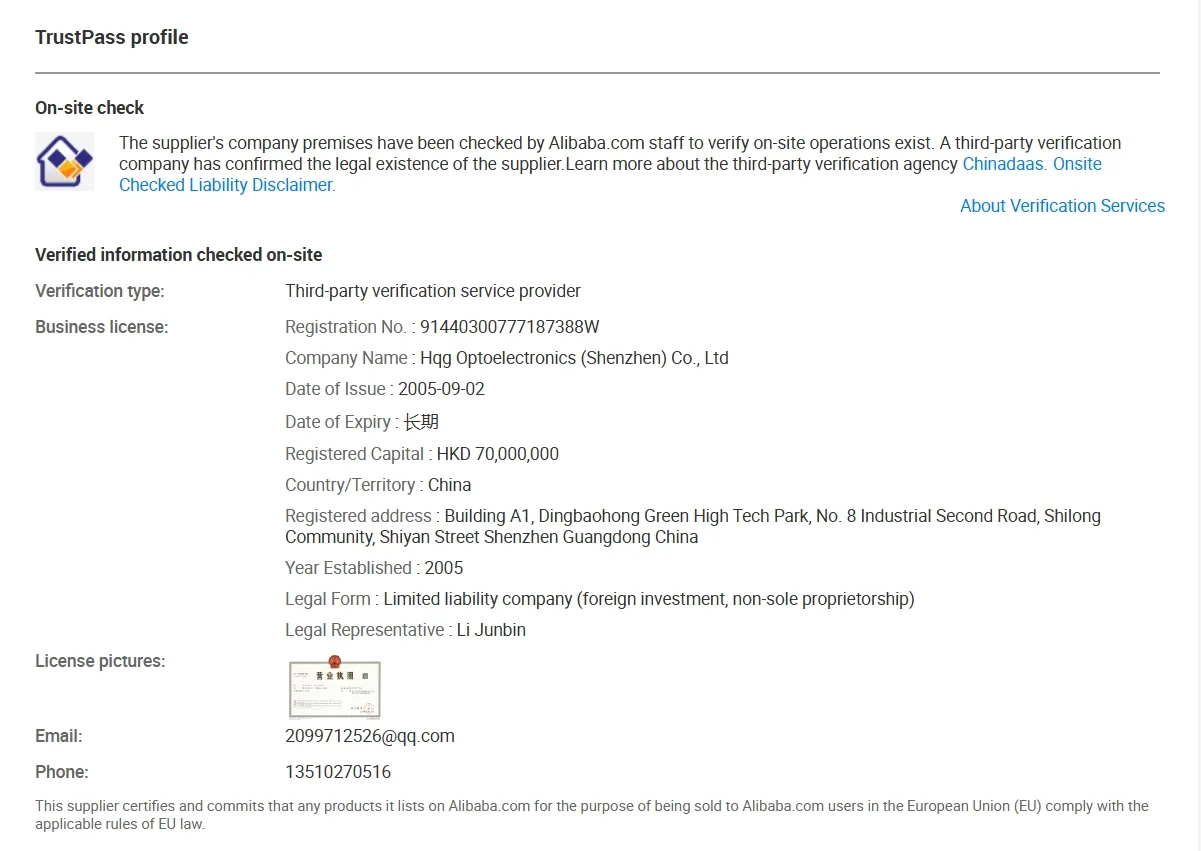
On-site check:
A blue logo indicates that the supplier has passed Alibaba’s on-site inspection. You can view factory videos on the store homepage, and click the logo to check company business information and business licenses.
Trade Assurance:
Orders with this logo are protected by Alibaba International Station, covering payment security, logistics disputes, etc.
Gold Supplier:
A paid membership service that provides more product promotion resources. The membership years are marked next to the icon (as shown below).
Selecting LED Beads Based on Project Requirements
Clearly communicate with manufacturers about project requirements for LED bead parameters (such as power, color temperature, lifespan), and optimize light emitting diode cost while meeting quality of LED standards.
2.1 Key Parameters Analysis
Parameter
Home Lighting
Commercial Lighting
Plant Growth Lights
Color Temperature (CCT)
2700K-4000K
4000K-6500K
Custom spectrum
Color Rendering Index (CRI/Ra)
>=80
>=90
N/A
Luminous Efficacy (lm/W)
100-120
120-150
PPF (μmol/J) priority
Lifespan (L70)
25,000 hours
50,000 hours
30,000 hours
2.2 Cost Optimization Strategies
Scheme Comparison (Based on 1000 Pieces Procurement)
Scheme
Unit Price
Total Cost
Lifespan
5-Year Comprehensive Cost
Basic LED (80lm/W)
$0.30
$300
20,000 hours
$580
Mid-range LED (120lm/W)
$1.20
$1,200
50,000 hours
$1,300
High-end LED (150lm/W)
$3.50
$3,500
70,000 hours
$3,700
Note: Comprehensive cost includes electricity fees (calculated at $0.15/kWh) and replacement labor costs. The difference in light emitting diode cost: basic indicator LEDs cost approximately $0.02-$0.50 per piece, while high-power lamp beads range from $2-$10 per piece. It is necessary to balance initial investment and long-term energy-saving benefits—for example, high-brightness lamp beads have higher procurement costs but can reduce the number of lamps required, indirectly saving overall costs.
The Subtlety of LED Bead Quantity
Order budget consists of product costs and logistics fees. Logistics is usually priced in weight tiers, and the average cost decreases significantly after reaching a critical weight. Experienced buyers calculate the optimal procurement quantity: if a single order does not meet the minimum freight weight, it can be combined with the next order for shipment, further diluting light emitting diode cost through large-scale procurement.
Latest Industry Trends (2024)
Technological Innovations: ✓ Popularization of quantum dot LEDs (CRI up to 98) ✓ Driverless IC design (reducing costs by 15-20%)
Supply Chain Changes: ✓ Southeast Asia emerging as a new production base (Malaysia’s LED production capacity increased by 40%) ✓ Rise of cross-border e-commerce direct procurement models (e.g., customized procurement through Shopify)
We use cookies to enhance your browsing experience, serve personalised ads or content, and analyse our traffic. By clicking "Accept All", you consent to our use of cookies.
Customise Consent Preferences
We use cookies to help you navigate efficiently and perform certain functions. You will find detailed information about all cookies under each consent category below.
The cookies that are categorised as "Necessary" are stored on your browser as they are essential for enabling the basic functionalities of the site. Show more
>Necessary
Necessary cookies are required to enable the basic features of this site, such as providing secure log-in or adjusting your consent preferences. These cookies do not store any personally identifiable data.
>Functional
Functional cookies help perform certain functionalities like sharing the content of the website on social media platforms, collecting feedback, and other third-party features.
>Analytics
Analytical cookies are used to understand how visitors interact with the website. These cookies help provide information on metrics such as the number of visitors, bounce rate, traffic source, etc.
>Performance
Performance cookies are used to understand and analyse the key performance indexes of the website which helps in delivering a better user experience for the visitors.
>Advertisement
Advertisement cookies are used to provide visitors with customised advertisements based on the pages you visited previously and to analyse the effectiveness of the ad campaigns.