I. Basic Understanding: The Meaning of SMD LED Numbers
1.1 What do the numbers represent?
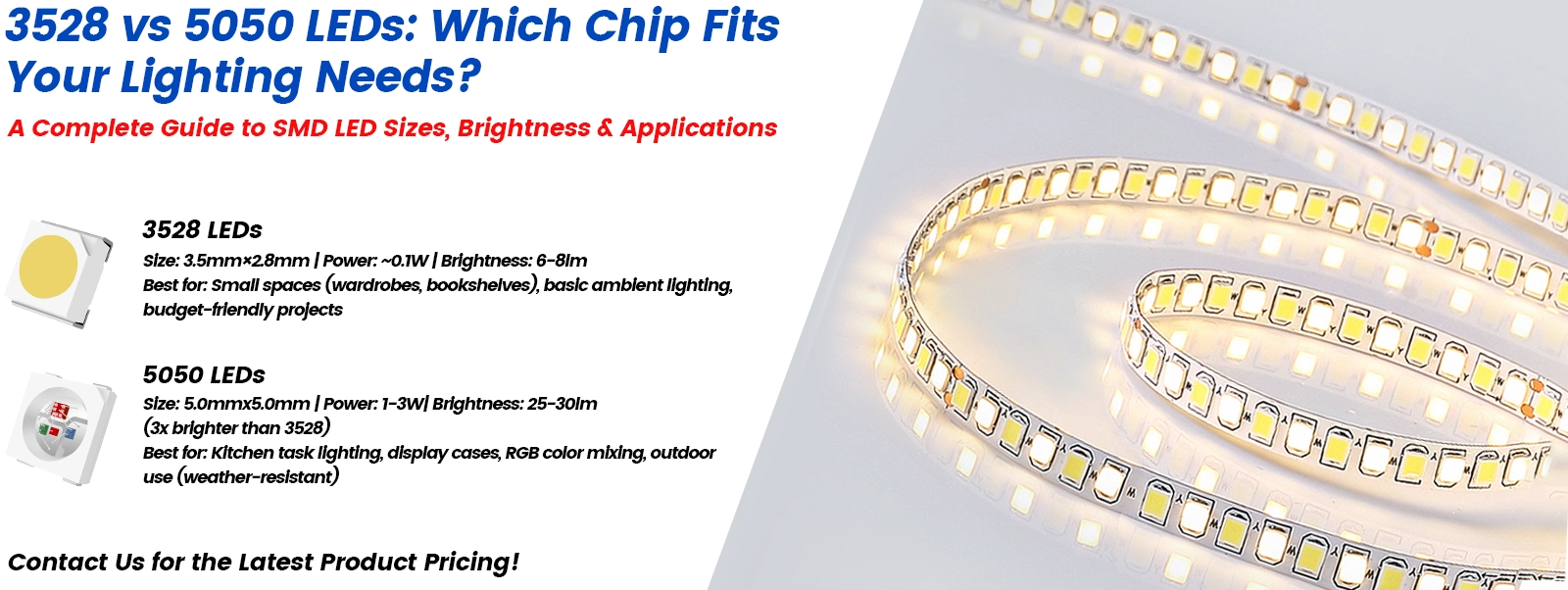
The numbers in SMD LED models directly indicate the physical dimensions of the chip (unit: millimeters):
3528: 3.5mm (length) × 2.8mm (width)
5050: 5.0mm (length) × 5.0mm (width)
Note: Some models may be labeled in inches, but the current mainstream market uses millimeters.
When users ask “what does 5050 mean” in LED specifications, the answer lies in these dimensions—smd5050 refers to a chip measuring 5.0mm x 5.0mm, a key distinction from smaller chips like 3528.
1.2 Key Structural Differences
The led 5050’s three-chip design enables advanced features like RGB color mixing, making smd 5050 ideal for dynamic lighting applications.
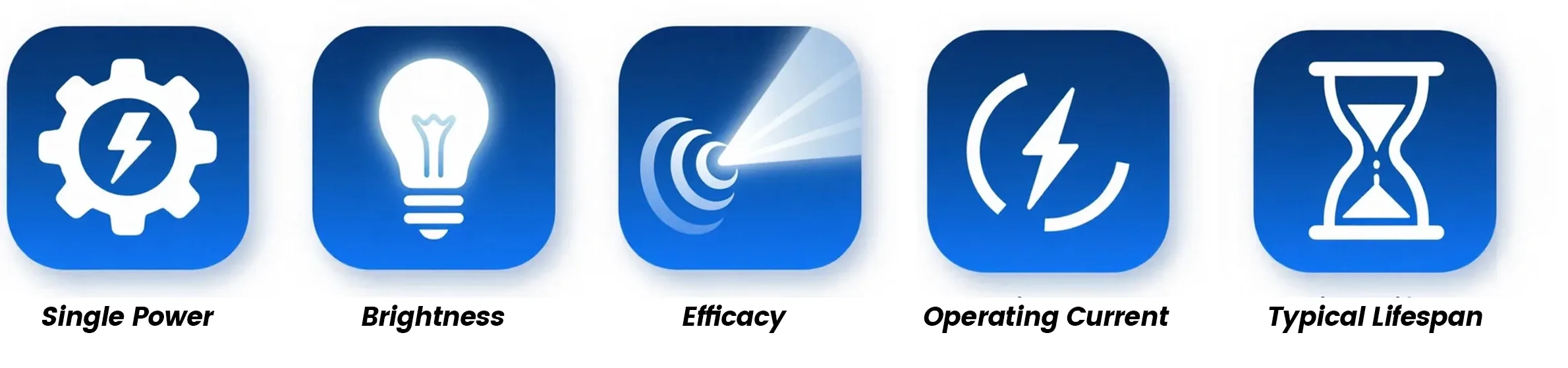
As shown, smd5050 outperforms 3528 in power, brightness, and efficacy, making led 5050 suitable for high-demand lighting scenarios.
2.2 Cost Analysis
Unit Price Comparison:
3528: $0.02-0.05/pc
5050: $0.08-0.15/pc Meter Cost (60pcs/m):
3528: $1.2-3.0/m
5050: $4.8-9.0/m
While smd 5050 has a higher upfront cost, its performance advantages justify the investment for professional applications.
III. Application Scenario Selection Guide
3.1 Recommended Scenarios
1. Low Brightness/Small Space Needs: Choose 3528 or its upgraded version 2835
3528 (or 2835) is ideal for basic lighting due to its small size and low cost:
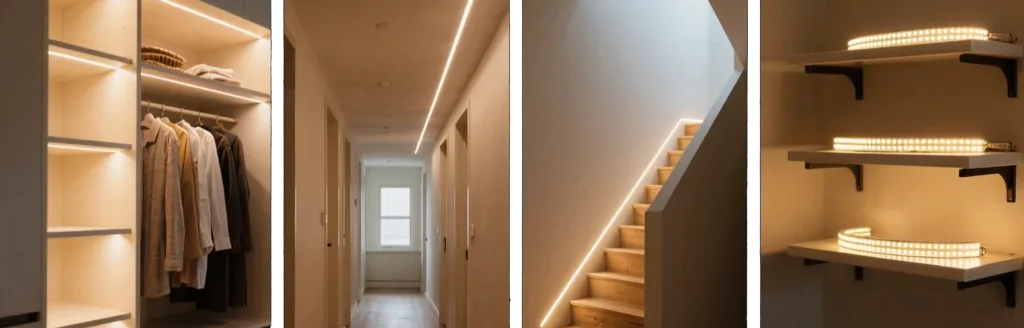
Small decorative light strips: Such as wardrobe ambient lights or bookshelf lighting, requiring only soft illumination.
Basic ambient lighting: Auxiliary lighting in corridors or stairwells, needing uniform coverage without high brightness.
Budget-constrained projects: 3528/2835 meets basic needs at a lower price point
2. High Brightness/Functional Needs: Choose 5050
SMD 5050 excels in scenarios demanding high brightness, color mixing, and durability:
Kitchen task lighting: Under-cabinet strips require focused light; led 5050’s high brightness ensures shadow-free cooking.
Commercial display lighting: Jewelry or collectible displays need high color rendering (Ra≥80); smd5050’s lumens and color accuracy highlight details.
RGB ambient lighting: smd 5050 supports multi-color mixing (e.g., RGB mode), ideal for dynamic color scenes like bar backdrops or holiday decorations.
Outdoor lighting: led 5050’s wide voltage range (6v/9v/24v/36v) and sulfur resistance adapt to gardens and landscape lights. The waterproof IP68 version with 24V power operates stably at -30℃~+60℃.
Application Scenario
Recommended Model
Reason
Typical Configuration
Cabinet Lighting
3528
Low power consumption, small size
120pcs/m, 3000K
Commercial Display Lighting
5050
High brightness, excellent color rendering
60pcs/m, CRI>90
RGB Ambient Lighting
5050
Independent three-chip control
30pcs/m, RGBW
Outdoor Contour Lighting
5050
Good waterproof performance, high brightness
IP67, 24V power supply
3.2 Selection Decision Tree
IV. Usage Precautions
4.1 Heat Dissipation Requirements
3528: Maximum density ≤144pcs/m, ambient temperature ≤40℃;
5050: Maximum density ≤60pcs/m, must use aluminum substrate;
4.2 Driver Power Selection
Model
Voltage
Current Requirement
Recommended Driver Type
3528
12V
0.5-1A/m
Constant voltage driver
5050
12/24V
1.5-3A/m
Constant current driver
V.Frequently Asked Questions
Q1: Does 5050 consume more power than 3528?
Yes, with the same quantity, smd5050 consumes approximately 2-3 times more power than 3528, but brightness also increases by 2-3 times.
Q2: Can 3528 and 5050 be mixed?
Not recommended, as electrical and physical differences cause:
Uneven brightness
Heat dissipation issues
Driver matching difficulties
Yes, with the same quantity, smd5050 consumes approximately 2-3 times more power than 3528, but brightness also increases by 2-3 times.
Not recommended, as electrical and physical differences cause:
Uneven brightness
Heat dissipation issues
Driver matching difficulties
2025 Market Trends
3528 is gradually replaced by 2835: New 2835 offers higher efficacy (100-120lm/W) in the same size.
smd5050 continues to evolve: Anti-sulfur versions (for polluted environments) are introduced.
Price trend: led 5050 prices decrease by 8-10% annually; 3528 remains stable.
The core difference between SMD 3528 and smd 5050 LED chips lies in the trade-off between “small size/low cost” and “large size/high brightness.” For basic lighting or small-space decoration, 3528/2835 is economical; for high brightness, color mixing, or outdoor durability, led 5050 is superior. Final selection depends on balancing brightness needs, functional requirements, and environmental conditions.
We use cookies to enhance your browsing experience, serve personalised ads or content, and analyse our traffic. By clicking "Accept All", you consent to our use of cookies.
Customise Consent Preferences
We use cookies to help you navigate efficiently and perform certain functions. You will find detailed information about all cookies under each consent category below.
The cookies that are categorised as "Necessary" are stored on your browser as they are essential for enabling the basic functionalities of the site. Show more
>Necessary
Necessary cookies are required to enable the basic features of this site, such as providing secure log-in or adjusting your consent preferences. These cookies do not store any personally identifiable data.
>Functional
Functional cookies help perform certain functionalities like sharing the content of the website on social media platforms, collecting feedback, and other third-party features.
>Analytics
Analytical cookies are used to understand how visitors interact with the website. These cookies help provide information on metrics such as the number of visitors, bounce rate, traffic source, etc.
>Performance
Performance cookies are used to understand and analyse the key performance indexes of the website which helps in delivering a better user experience for the visitors.
>Advertisement
Advertisement cookies are used to provide visitors with customised advertisements based on the pages you visited previously and to analyse the effectiveness of the ad campaigns.