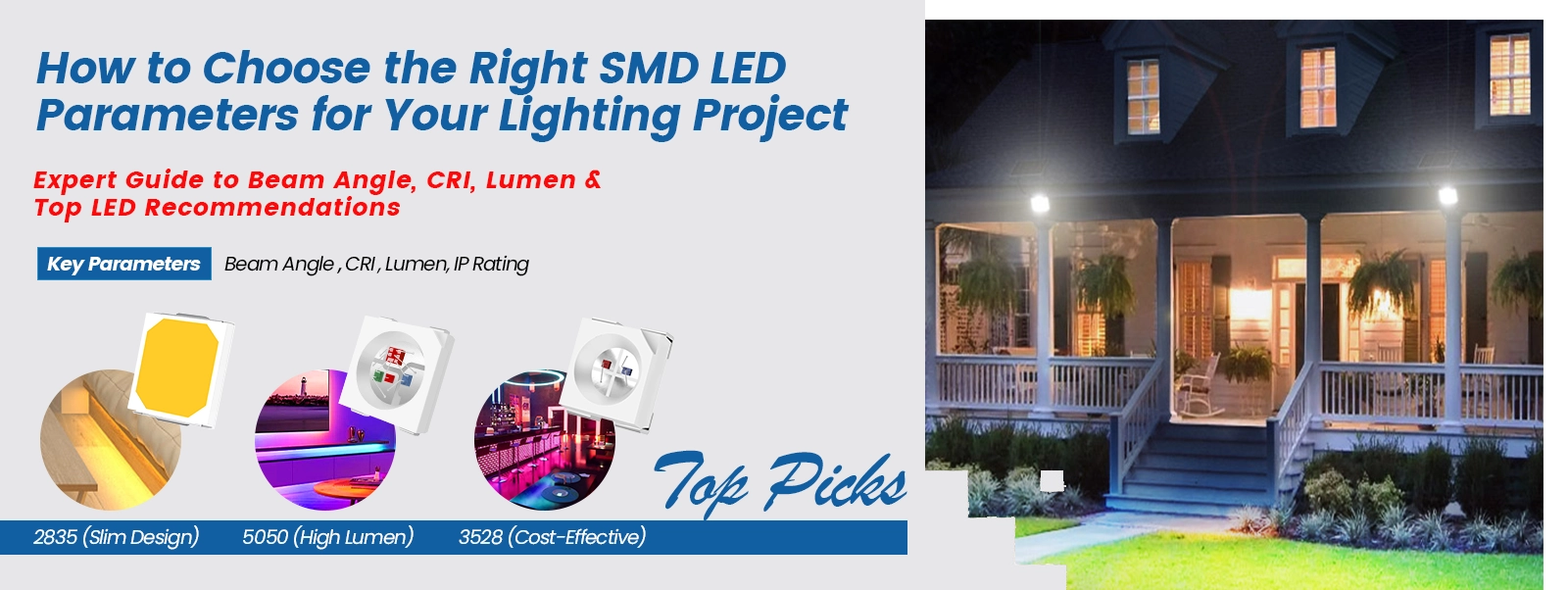
How to Choose LED: Selecting the Right SMD LED Parameters for Your Lighting Project
August 15, 2025
|
Posted by ym
1. Application: Accent, Task, Decorative, or Outdoor Lighting?
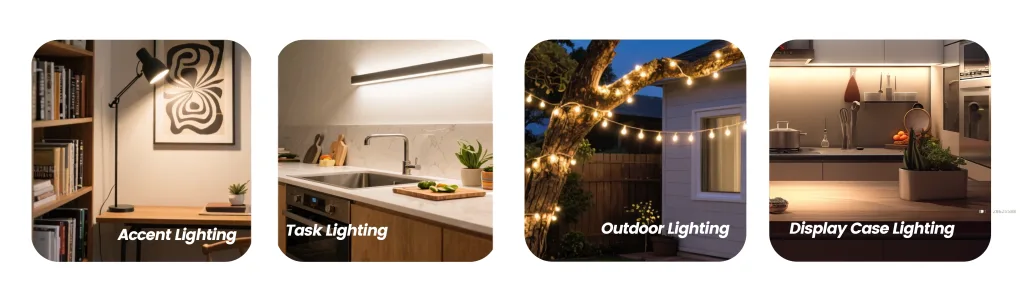
Accent Lighting: Focuses on highlighting specific objects/areas (e.g., artworks). Key parameters include a narrow beam angle (15°-45°) and high central intensity for precise focus.
Task Lighting: Provides uniform, glare-free light for activities like reading or cooking. Prioritize diffused lenses for evenness and flicker-free operation to reduce eye strain.
Display Case Lighting: Requires high color rendering (Ra ≥80) and low heat/UV emission to protect exhibits. Choose low thermal resistance packages or heat-dissipating designs.
Outdoor Lighting: Demands weather resistance (e.g., UV-resistant materials) and waterproof drivers. Opt for IP65+ ratings for spray protection and durable enclosures.
2. Dimming Requirements
Dimmable LEDs: Need compatible drivers (e.g., PWM dimming requires ≥200Hz frequency support). Check dimming range (e.g., 1%-100% stepless adjustment) for flexibility.
Fixed-Brightness LEDs: Suitable for cost-sensitive or static场景 (e.g., garages). Ensure luminous flux consistency (deviation ≤5% for batch purchases).
3. Color Selection
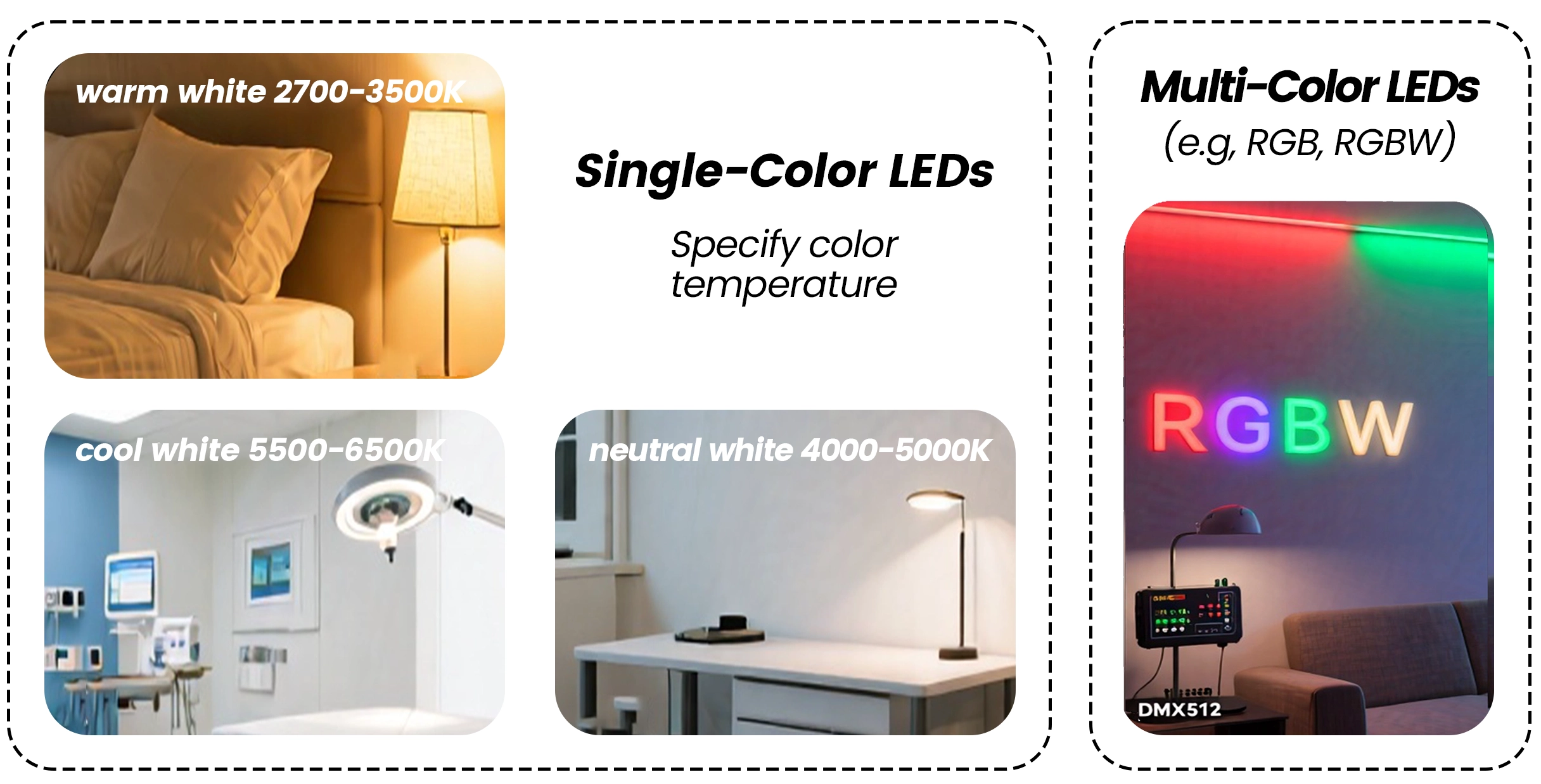
Single-Color LEDs: Specify color temperature (warm white 2700-3500K, neutral white 4000-5000K, cool white 5500-6500K) to match ambient needs.
Multi-Color LEDs(e.g., RGB, RGBW): Prioritize uniform color mixing (integrated packages recommended) and control protocols like DMX512 for dynamic effects.
4. Color Rendering Index (CRI)
CRI (Ra value) indicates color accuracy:
Ra ≥90: Ideal for museums/jewelry stores requiring precise color还原.
Ra 80-90: Sufficient for offices and homes.
Ra <80: Risk of color distortion (e.g., misleading product perception in retail).
5. Brightness Requirements (Lumens)
Calculate total lumens based on illuminance needs (Illuminance = Total Lumens × Efficiency / Area). For example:
We use cookies to enhance your browsing experience, serve personalised ads or content, and analyse our traffic. By clicking "Accept All", you consent to our use of cookies.
Customise Consent Preferences
We use cookies to help you navigate efficiently and perform certain functions. You will find detailed information about all cookies under each consent category below.
The cookies that are categorised as "Necessary" are stored on your browser as they are essential for enabling the basic functionalities of the site. Show more
>Necessary
Necessary cookies are required to enable the basic features of this site, such as providing secure log-in or adjusting your consent preferences. These cookies do not store any personally identifiable data.
>Functional
Functional cookies help perform certain functionalities like sharing the content of the website on social media platforms, collecting feedback, and other third-party features.
>Analytics
Analytical cookies are used to understand how visitors interact with the website. These cookies help provide information on metrics such as the number of visitors, bounce rate, traffic source, etc.
>Performance
Performance cookies are used to understand and analyse the key performance indexes of the website which helps in delivering a better user experience for the visitors.
>Advertisement
Advertisement cookies are used to provide visitors with customised advertisements based on the pages you visited previously and to analyse the effectiveness of the ad campaigns.