Purchase Guides & Maintenance Tips

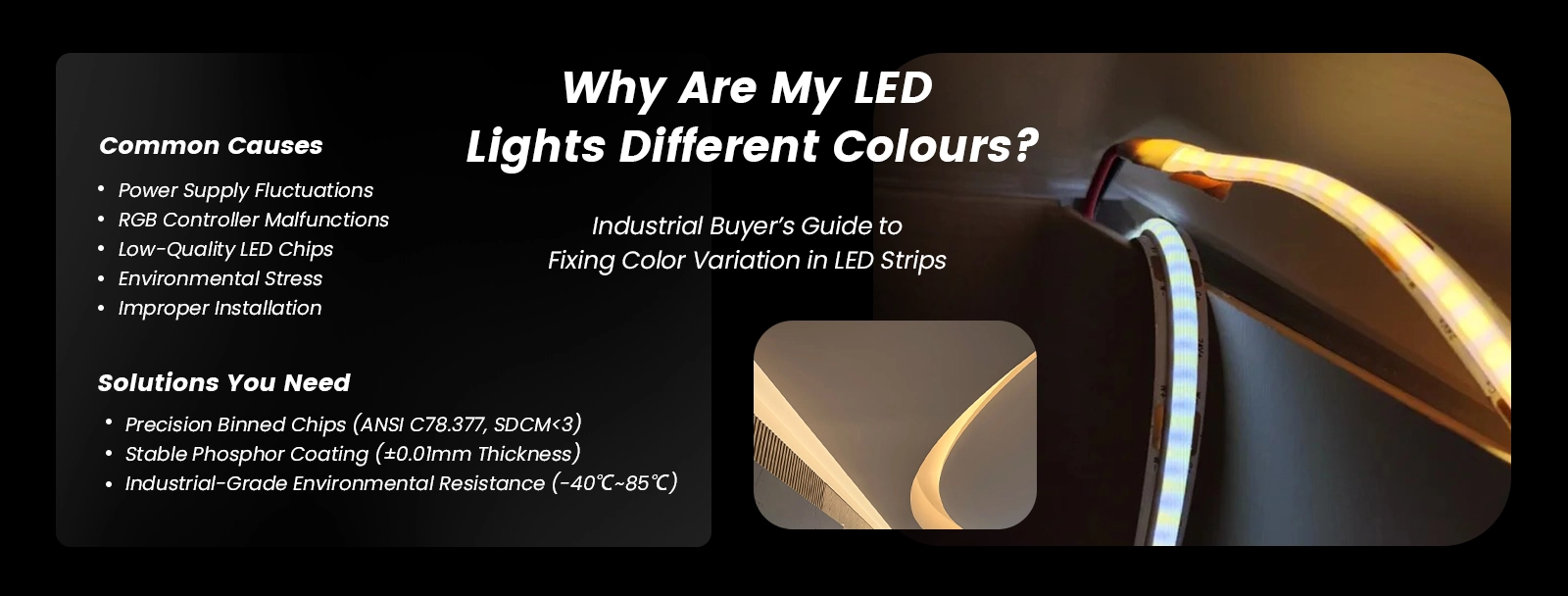
Why Are My LED Lights Different Colours?

  |  
Posted by ym


For B2B buyers sourcing LED strips—whether for commercial lighting, machinery indicators, or smart buildings—color inconsistency is a recurring headache. It disrupts brand uniformity, compromises safety signals, and leads to costly rework. As a 10-year LED chip manufacturer, we’ll break down the 5 most common causes of color variation in LED strips, actionable fixes, and how high quality LED chips can eliminate these issues at the source.

5 Common Problems with LED Light Strips & B2B Impacts

Industrial LED applications demand precision. Below are the top 5 issues causing color variation, their root causes, and why they matter for bulk buyers:

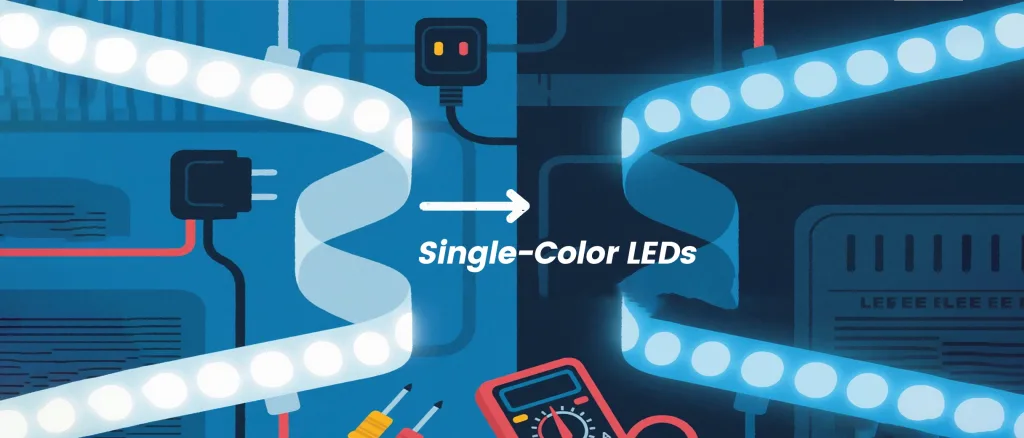
1. Unstable Power Supply

LEDs are voltage-sensitive devices. Fluctuations from underpowered adapters, long wire runs, or inconsistent voltage can cause individual diodes to emit varying colors. For example:

  • A 12V strip powered by a 9V supply may dim or shift to cooler tones (blues/whites) due to insufficient current.
  • oltage drop over long strips (common in warehouses or factories) can leave the end dimmer or discolored compared to the start.

B2B Impact: In large-scale deployments (e.g., 500+ meters for a factory), uneven power supply leads to zone-to-zone color differences, requiring expensive rewiring or replacements.
2. RGB Controller Malfunctions

RGB strips rely on controllers to mix red, green, and blue diodes for precise colors. Issues often stem from:

  • Faulty wiring: Crossed or loose connections between the controller and strips.
  • Firmware glitches: Outdated or incompatible software in smart controllers (e.g., Wi-Fi/Bluetooth modules).
  • Component mismatch: Using a controller rated for 30 LEDs/m with a 60 LEDs/m strip, causing overload.

B2B Impact: For buyers integrating RGB strips into branded environments (e.g., retail chains) or safety signaling (e.g., machinery status lights), color inaccuracies damage brand identity or risk safety.

3. Low-Quality LED Chips

Not all LED chips are created equal. Budget-friendly strips often use subpar chips with:

  • Uneven phosphor coating: Critical for white LEDs, uneven coatings cause “yellowing” or “bluing” in different sections.
  • Loose binning: LEDs are binned by color temperature (e.g., 3000K warm white) during manufacturing. Low-quality suppliers skip strict binning, mixing chips from different batches.

B2B Impact: Bulk purchases of un-binned chips can result in 20-30% of strips deviating from the target color, leading to costly returns or rejections.
4. Environmental Stress

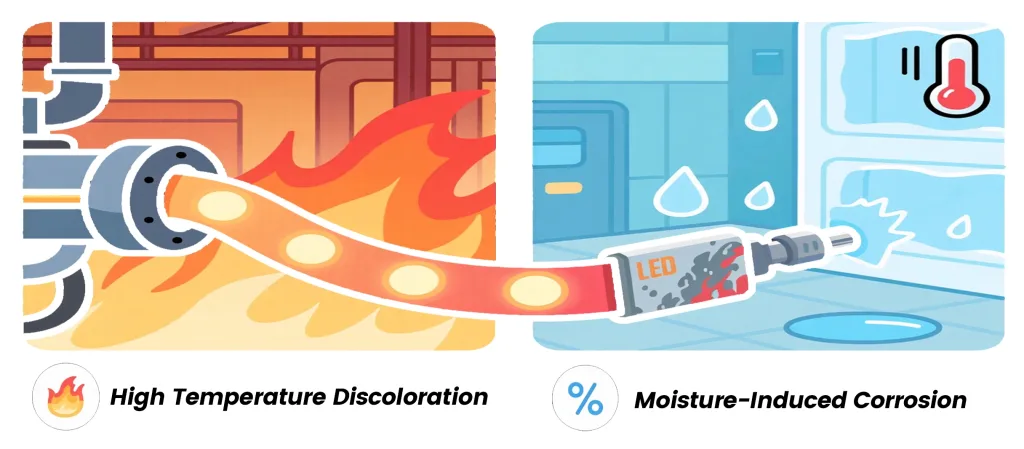
Industrial environments (high heat, humidity, dust) accelerate LED degradation:

  • Temperature fluctuations: Extreme heat (e.g., near machinery) or cold (e.g., cold storage) degrades LED drivers, causing color shifts.
  • Moisture/dust: Corrosion from humidity or dust buildup in connectors disrupts current flow.

B2B Impact: For buyers in automotive, food processing, or outdoor applications, environmental damage leads to frequent replacements, increasing lifecycle costs by 30-50%.

5. Improper Installation

Even high quality LEDs fail if installed incorrectly:

  • Cutting at non-designated points: RGB strips have cut marks every 5-10cm; cutting elsewhere damages internal circuits.
  • Insufficient heat dissipation: Mounting strips on non-conductive surfaces (e.g., plastic) traps heat, accelerating diode degradation.

B2B Impact: For contractors or integrators, installation errors in large projects (e.g., stadium lighting) lead to callbacks and client dissatisfaction.
How to Fix LED Color Variation: From Immediate Solutions to Wholesale Procurement

To ensure consistent colors, industrial buyers need both quick fixes for existing issues and long-term solutions for bulk sourcing. Here’s how high quality LED chips play a key role:

Immediate Fixes for Existing Installations

  • Audit power systems: Use a multimeter to check voltage at strip endpoints. Upgrade to higher-wattage power supplies or add mid-strip boosters for long runs.
  • Test controllers: Reset/update firmware; verify compatibility with strip specs (e.g., max watts per channel).
  • Replace damaged sections: Cut out discolored segments and splice in new strips (using manufacturer-approved connectors).

Wholesale Solutions: Partner with Quality LED Chip Factories

When sourcing in bulk, prioritize factories that offer:

  • Precision binning: Look for ANSI C78.377 certification (SDCM<3) to ensure <2% color deviation across batches.
  • Stable phosphor coating: Partner with factories using high-precision spraying equipment (e.g., coating thickness error <0.01mm) to eliminate “yellowing/bluing.”
  • Environmental resistance: Choose chips passing -40℃~85℃ thermal cycling tests and sulfur resistance tests for industrial durability.

Bulk Purchase Considerations

  • Lifecycle cost > upfront price: A $0.30 cheaper chip may cost 2x more in replacements over 5 years due to color drift.
  • Warranty terms: Insist on 3-5 year warranties covering color consistency (not just “no dead pixels”).
  • Scalability: Choose factories with flexible MOQs (e.g., 5,000 chips/order) and batch matching for future orders.

Color Consistency Starts with Quality LED Chips

For industrial buyers, LED color variation isn’t just a technical issue—it’s a risk to operational efficiency, brand reputation, and profits. By understanding root causes, demanding rigorous quality from LED chip factories, and prioritizing lifecycle value, you can ensure your next bulk order delivers uniform, reliable performance.

Ready to source LED chips that eliminate color variation? Contact our B2B team for free samples, batch uniformity reports, and customized solutions—because for industrial buyers, high quality LED chips are the foundation of color consistency.

We value your privacy

We use cookies to enhance your browsing experience, serve personalised ads or content, and analyse our traffic. By clicking "Accept All", you consent to our use of cookies.